
Municipal wastewater treatment is under pressure like never before. Flows fluctuate unpredictably, pollutant loads are higher, and communities increasingly demand water reuse solutions. Utilities must maintain consistent treatment performance while reducing energy and chemical use. Traditional membrane systems often struggle under these conditions, particularly when faced with sudden surges or variable solids content.
Fibracast‘s FibrePlate Fusion™ was developed to address these challenges. The high-flux, durable membranes provide stable operation even under extreme or fluctuating conditions. Coupled with optimized aeration protocols and predictive controls, FibrePlate Fusion™ enables plants to maintain treatment quality while reducing energy use and chemical dosing. The system gives utilities the flexibility and reliability required to meet today’s operational demands and prepare for future climate and water reuse challenges.
Real-World Testing Drives Development
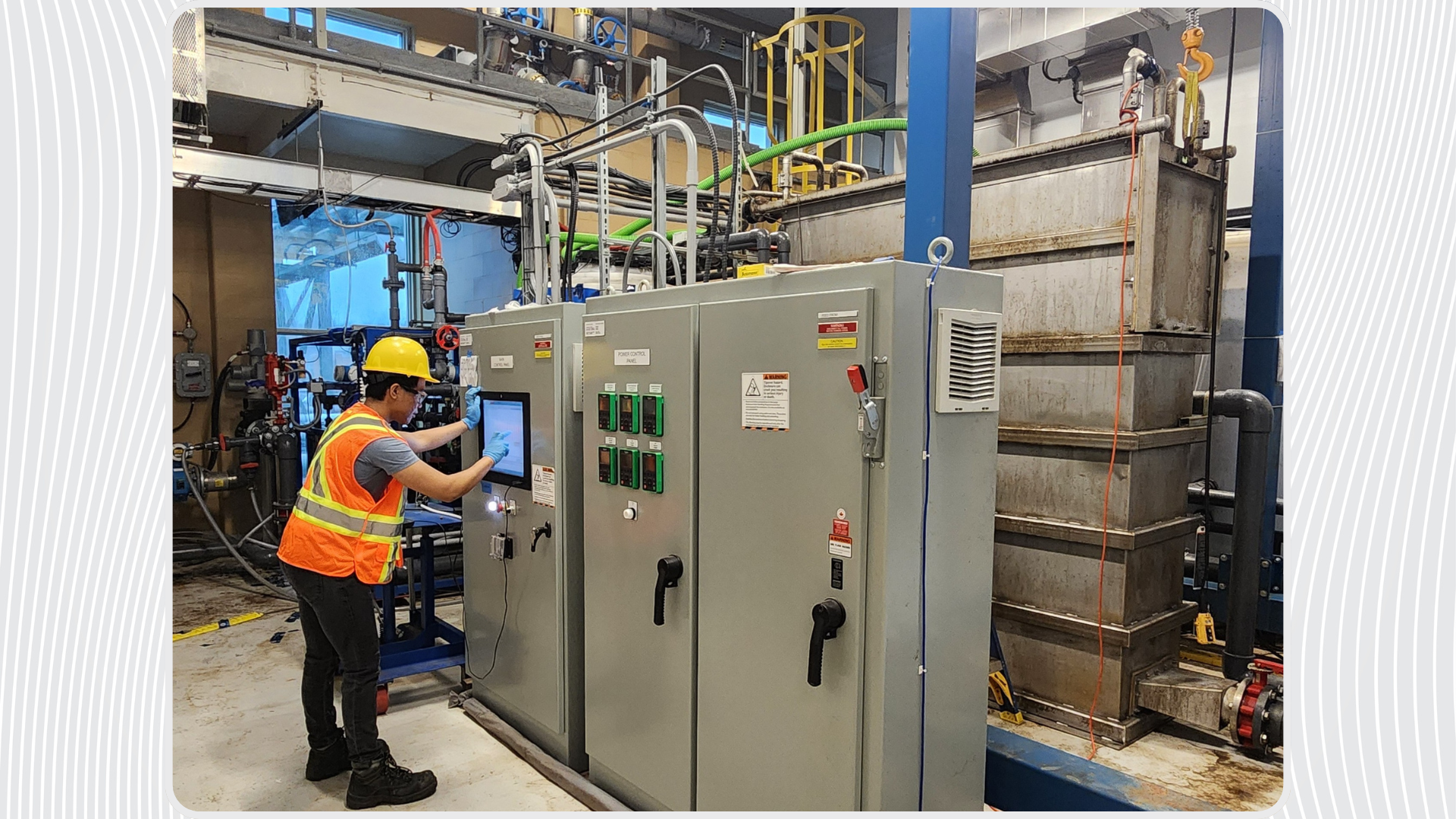
In 2023, support from the Ontario Water Consortium’s Water Industry Growth (WIG) Program was instrumental in advancing FibrePlate Fusion™ from development to demonstration. In collaboration with Western University, the University of Michigan, and the OWC London Wastewater Facility, Fibracast had access to real municipal wastewater and activated sludge, creating an environment that could not be replicated in the lab.
Testing with real activated sludge allowed the team to observe true fouling behavior, biological variability, and solids characteristics. At the London pilot testing facility, full size commercial membrane modules could be intentionally stressed to determine their operational and performance limits. This approach enabled validation of new membrane designs, evaluation of aeration strategies, refinement of cleaning protocols, and assessment of long-term durability.
“The pilot facility gave us confidence that our technology could perform where it matters most,” said Elnaz Halakoo, R&D Manager at Fibracast. Rapid feedback from real-world testing allowed the team to iterate quickly, shortening development timelines and accelerating decision-making on product improvements.
Academic partners were crucial in de-risking the technology and supporting commercialization. Western University contributed expertise on emerging contaminants, ensuring the system could handle pollutants that increasingly concern utilities. The University of Michigan focused on predictive analytics, helping develop SMART-MBR controls. These predictive tools provide operators with early warnings of potential fouling or performance decline, allowing proactive interventions before operational issues arise.
Fibracast also sees municipal collaboration as key to adoption. Early engagement allows climate resilience and advanced treatment requirements to be incorporated from the outset of planning and design. Municipal partners gain access to pilot testing, high-quality treated water suitable for reuse or discharge, and insights that improve operational efficiency and resilience. Integrating complementary technologies supports complete treatment systems and expands deployment opportunities across Southern Ontario and beyond.
Technology Evolution and Operational Gains
Since the WIG-supported demonstration, FibrePlate Fusion™ has evolved significantly. Membranes now operate across a wider flux range while maintaining stable treatment. Energy consumption has decreased, cleaning frequency has been reduced, and chemical dosing requirements are lower, all while maintaining reliable treatment under variable loads. These improvements strengthen operational resilience, enabling utilities to handle unplanned high flows or variable solids without compromising performance.
Pilot testing also informed operational strategies. Testing in real-world conditions confirmed that the Fibracast MBR ™ system could meet rigorous performance expectations, providing a stable, long-term solution with an expected service life exceeding ten years. Lessons learned from the London pilot facility continue to shape both product development and operational best practices, positioning Fibracast as a leader in high-performance membrane technology for climate-resilient wastewater treatment.
Fibracast is targeting broader adoption in North America and international markets. New applications include indirect and direct potable reuse, aquifer recharge, and nanofiltration for higher-quality treatment. Utilities increasingly require systems capable of handling hydraulic variability, and FibrePlate Fusion™ is designed to deliver stable performance under these conditions.
SMART-MBR predictive controls will further enhance plant operations. Operators can identify conditions trending toward fouling or declining performance and take early corrective action, maintaining consistent treatment and reducing operational risk. By combining high-performance membranes with AI-enabled insights, Fibracast helps utilities optimize energy use, reduce maintenance costs, and improve operational reliability.
Driving Innovation Forward
The WIG-supported project enabled Fibracast to demonstrate the feasibility of FibrePlate Fusion™ under real wastewater conditions, refine operational strategies, and accelerate commercialization. Academic collaboration, municipal partnerships, and real-world pilot testing combined to create a technology that is ready for broader adoption while providing utilities with actionable insights and tangible operational benefits.
“The project accelerated our development roadmap and gave us confidence that the technology performs where it counts,” Elnaz said. “Real-world pilot conditions allowed us to iterate quickly and make data-driven decisions that will benefit utilities for years to come.”
As deployment increases and partnerships grow, Fibracast expects continued adoption of Fusion™ and SMART-MBR solutions globally. Lessons from the pilot work and ongoing collaboration with academic and municipal partners provide a foundation for further innovation. By focusing on performance, reliability, and climate resilience, Fibracast is helping utilities navigate the complex challenges of modern wastewater management while preparing for future water reuse and environmental demands.
Partner with Fibracast
Fibracast works with municipalities, utilities, and research partners to test and implement FibrePlate Fusion™ and SMART-MBR solutions. Early collaboration allows partners to access pilot-scale testing, operational insights, and real-world data to support technology adoption and performance optimization.
To explore collaboration opportunities, reach out through the Ontario Water Consortium or contact Elnaz Halakoo, R&D Manager at Fibracast, directly.